The Mediterranean Diet Has a Drink. And It's Not What You Think
Everyone knows the Mediterranean diet. Olive oil, fresh vegetables, whole grains, fish, legumes — it's become the gold standard for how to eat for longevity, heart health, and overall wellbeing.
But here's what the conversation almost always skips: what do people in the Mediterranean actually drink?
The answer isn't a green smoothie. It isn't a protein shake. And increasingly, it isn't just wine.
The Mediterranean approach to drinking is as thoughtful and intentional as its approach to eating — rooted in quality ingredients, cultural heritage, and the idea that a drink should be something worth savoring, not just consuming. And one ingredient at the center of that tradition is only now starting to get the global attention it deserves.
What the Mediterranean Diet Actually Says About Drinking
The Mediterranean diet isn't just a food framework — it's a lifestyle. And alcohol, consumed mindfully and socially, has always been part of it.
Traditional Mediterranean drinking culture shares a few consistent principles:
Quality over quantity. A small pour of something exceptional is always preferred to a large pour of something forgettable. This is why you'll rarely see oversized drinks at a Greek taverna or a Spanish bar — the point is to savor, not to consume.
Drink with food. Alcohol in Mediterranean culture is almost never consumed on an empty stomach. It accompanies a meal, anchors a social gathering, or follows a long lunch. The drink is part of the experience, not the experience itself.
Ingredients matter. Mediterranean spirits and liqueurs are built from real, place-specific ingredients — grape pomace, citrus, herbs, resins. You know exactly what you're drinking and where it came from.
Slow down. The Mediterranean approach to drinking is the opposite of a rushed cocktail at a crowded bar. It's an afternoon on a terrace, a long dinner, a digestif after the plates are cleared.
These aren't just cultural quirks — they're part of why the Mediterranean lifestyle is associated with longevity and wellbeing.
What People in Greece Actually Drink
Wine gets the most attention in Mediterranean drinking culture, but Greece's drinks tradition runs much deeper than a glass of Assyrtiko.
Mastiha liqueur — made from the resin of mastic trees that grow only on the island of Chios — has been part of Greek drinking culture for over 2,500 years. Ancient Greeks consumed it medicinally and ceremonially. Traders prized it across the Mediterranean. The Ottoman Empire taxed it because it was so valuable. Today it holds Protected Designation of Origin (PDO) status from the European Union — the same certification as Champagne and Parmigiano-Reggiano.
Ouzo accompanies many seaside meals in Greece — small glasses, slow sipping, plates of octopus and olives.
Tsipouro, a raw grape pomace spirit, is the drink of northern Greece — bold, warming, and always shared.
Rakomelo, honey-spiced raki, is the Cretan version of a hot toddy — warming, herbal, ancient.
Each of these drinks is deeply tied to a specific place, a specific season, and a specific way of gathering. That's what makes them Mediterranean in the truest sense.
The Problem with "Mediterranean Drinks" in the US
If you search for Mediterranean drinks in the United States, you'll mostly find wine lists and generic cocktail menus with a lemon garnish. The depth and diversity of Greece's drinks culture — and the broader Mediterranean tradition — is almost entirely absent from American bars and bottle shops.
Part of that is distribution. Greek spirits have been produced for domestic consumption and short-range export for most of their history. Part of it is awareness — ouzo gets a passing reference, but mastiha, tsipouro, and kitron remain almost unknown to most American drinkers.
And part of it is format. The way Americans drink has changed dramatically. Convenience matters. Portability matters. The RTD category — ready-to-drink canned cocktails — has grown 30% in the first quarter of 2026 alone, driven by consumers who want a premium drink without the prep.
Greek spirits, with all their heritage and complexity, have had no presence in that space.
Until now.
Dosi Dosi: The Mediterranean Diet's Missing Drink
Dosi Dosi was built on a simple idea: take the most distinctive and underappreciated ingredient in Greek drinks culture, pair it with the flavors that bring out its best qualities, and put it in a format that meets people where they are.
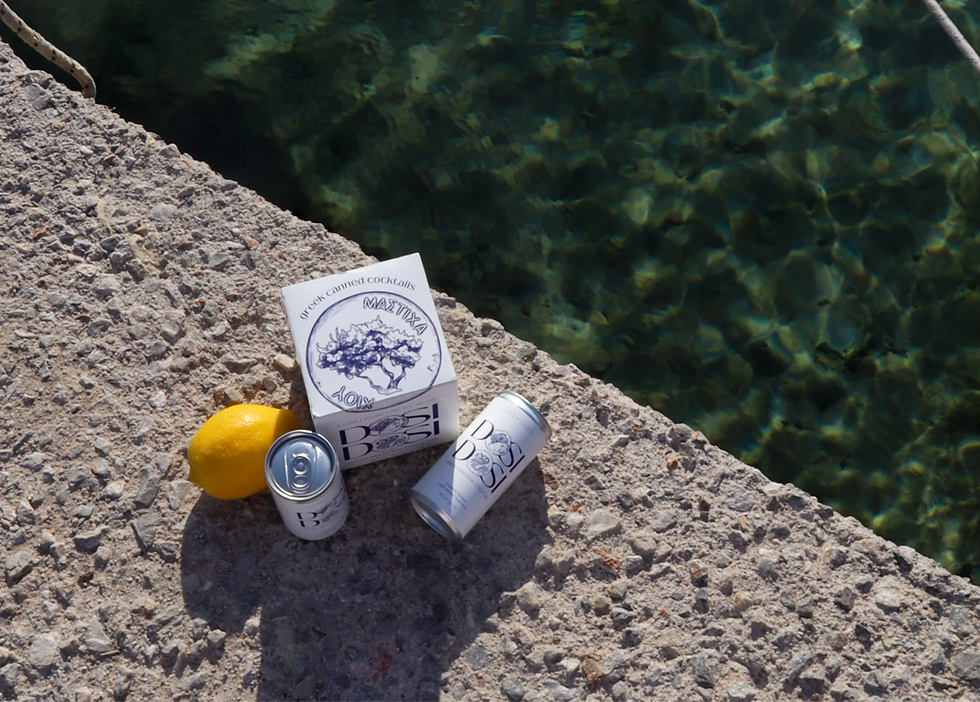
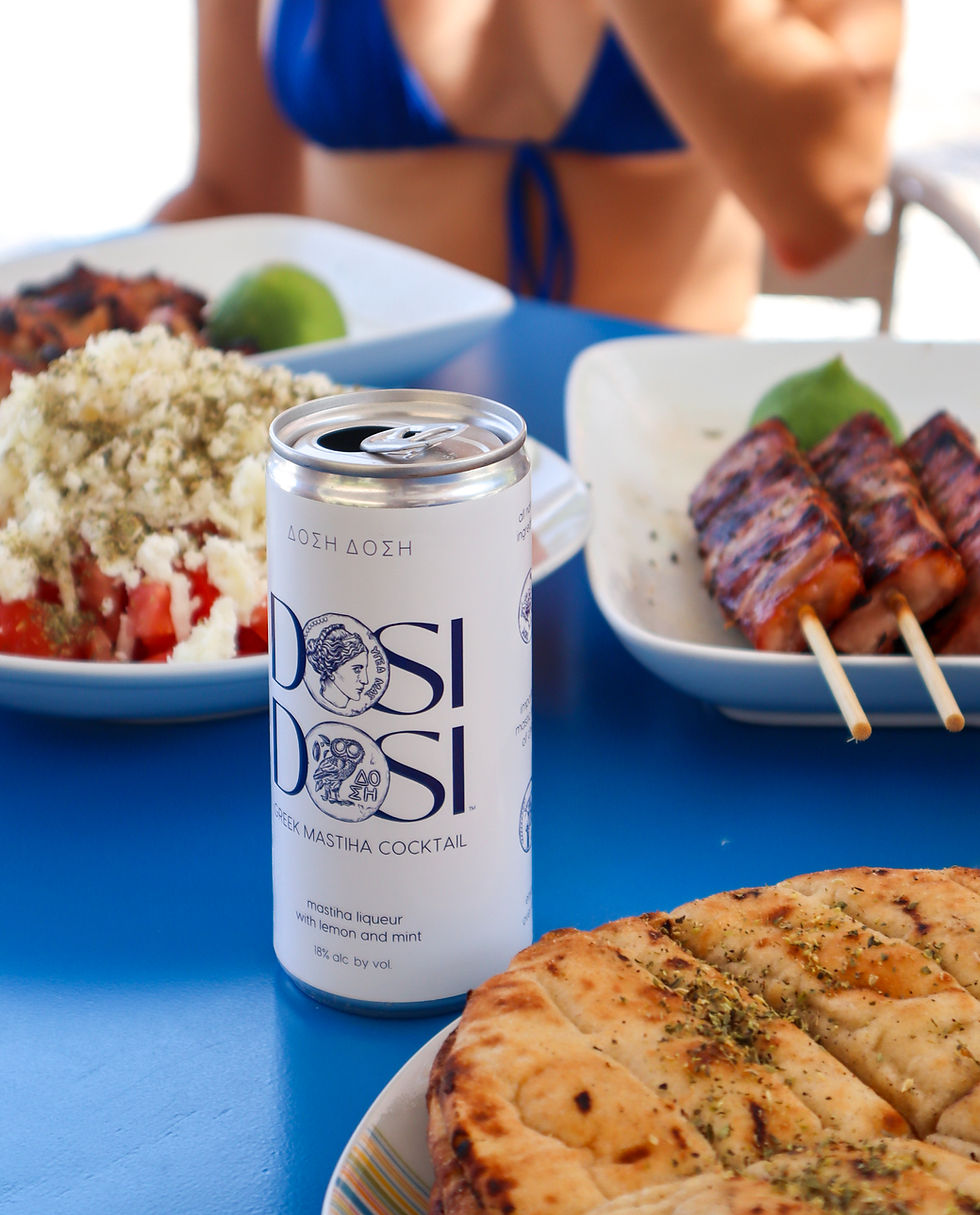
The result is the first Greek canned cocktail in the United States — a blend of PDO-certified Chios mastiha liqueur, lemon, and mint in a 200ml can at 18% ABV.
Why mastiha? Because it's the ingredient that best embodies what makes Mediterranean drinking different. It's rare, geographically specific, and completely natural. Its flavor — bright pine resin, fresh citrus, clean herbal finish — is unlike anything in the Western spirits canon. And it has a 2,500-year track record of being consumed by people who understood that what you drink matters as much as what you eat.
Why canned? Because the Mediterranean approach to drinking isn't precious — it's practical. A long lunch by the sea, a picnic, a rooftop gathering — the drink should be easy to bring and easy to pour. At 18% ABV, each 200ml can pours two cocktails over ice, delivering a bar-quality drink without any mixing or prep.
Why lemon and mint? Because they're the flavors the Mediterranean has always paired with mastiha. Bright, fresh, and herbaceous — they bring out the citrus notes in the resin and create something that tastes genuinely like a Greek summer afternoon.
Drinking the Mediterranean Way in 2026
Consumer tastes are shifting in a direction that Mediterranean drinking culture has always occupied. People want to know where their ingredients come from. They want quality over quantity. They want drinks with a story — not just a flavor.
A 2026 report from Mintel noted that demand is moving from broad flavor categories to pinpointed origin stories. Consumers don't just want "citrus" — they want to know which island the citrus came from, who grew it, and what tradition it belongs to.
Mastiha checks every single one of those boxes. It comes from one island. It's harvested by hand using a method unchanged for millennia. It has PDO certification guaranteeing its authenticity.
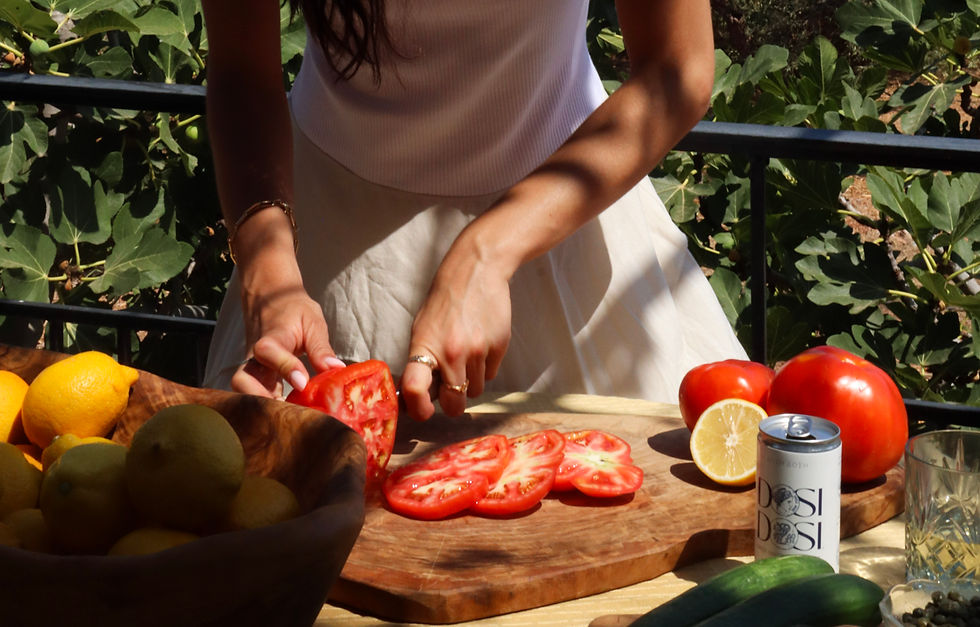
The Mediterranean diet gave the world a blueprint for eating well. Dosi Dosi is making the case that the same philosophy — real ingredients, specific origins, slow enjoyment — should apply to what's in your glass too.
How to Drink Dosi Dosi the Mediterranean Way
Pour it over ice. Sit down and sip!
That's it. No recipe, no shaker, no measuring. Just a well-made drink with something worth tasting in it.
Pair it with olives, cheese, grilled fish, or a mezze spread. Or drink it on its own as an aperitif before a meal — the mastiha and citrus combination is light enough to open the appetite without overwhelming it.
Dosi Dosi is available at select California retailers and ships to select states online. Find a store near you or shop online.
Frequently Asked Questions
What do people in the Mediterranean actually drink?
Mediterranean drinking culture includes wine, ouzo, tsipouro, mastiha liqueur, and a range of regional spirits tied to specific places and traditions. The common thread is quality ingredients, moderate consumption, and drinking socially alongside food — not in isolation.
Is alcohol part of the Mediterranean diet?
Moderate alcohol consumption, particularly wine and spirits consumed alongside food, has historically been part of Mediterranean culture and is often included in broader discussions of the Mediterranean lifestyle. The emphasis is always on moderation, quality, and the social context of drinking rather than alcohol consumption for its own sake.
What is mastiha and why is it considered a Mediterranean ingredient?
Mastiha is a natural resin harvested from mastic trees that grow exclusively on the Greek island of Chios. It has been used in Greek and broader Mediterranean culture for over 2,500 years — in food, medicine, cosmetics, and spirits. It holds Protected Designation of Origin (PDO) status from the European Union, certifying its authenticity and geographic specificity. Read more about Mastiha here.
What is Dosi Dosi?
Dosi Dosi is the first Greek canned cocktail in the United States. It is made with PDO-certified Chios mastiha liqueur, lemon, and mint in a 200ml can at 18% ABV. Each can pours two cocktails over ice, designed to be served simply and enjoyed slowly — in the Mediterranean tradition.
How is Dosi Dosi different from other canned cocktails?
Most canned cocktails are built around vodka, tequila, or malt bases with sweetened flavors. Dosi Dosi is non-carbonated, bar-strength, and built around mastiha — a PDO-certified Greek ingredient with 2,500 years of history. It is designed to drink like a proper cocktail, not a flavored seltzer.
Where can I buy Dosi Dosi?
Dosi Dosi is available at select retailers across California. We also ship to select states — visit our store locator to find a retailer near you or check if we deliver to your state. Don't see us locally yet? Ask your liquor store to carry us.


Comments